
Six philosophical schools. Eighteen chapters of the Gita. One AI tutor trained on all of it.
The encyclopedic reference for Sanatan Dharma. Word-by-word Sanskrit analysis, 60 philosophical comparisons, and an AI tutor that distinguishes between schools instead of conflating them.
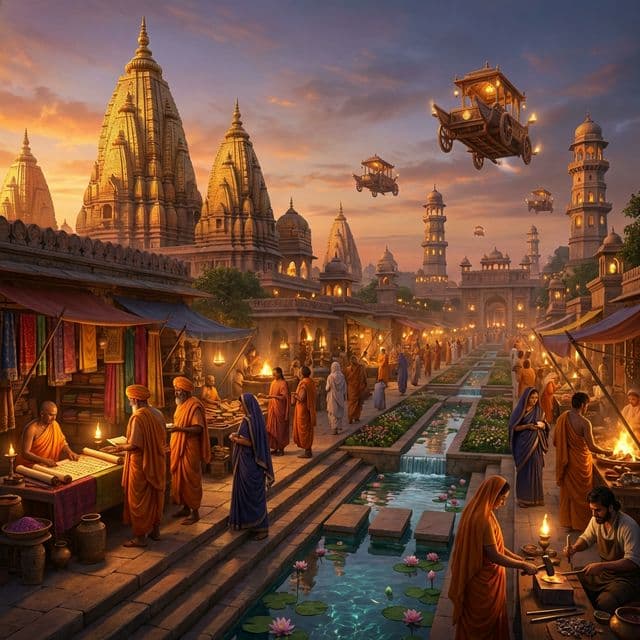
An AI Tutor That Actually Knows the Texts
Not another chatbot summarizing Wikipedia. A tutor trained on primary scriptures, traditional commentaries, and centuries of scholarly interpretation.
The Philosopher
Socratic questioning across all six darshanas. Ask about consciousness, and the tutor walks you through Samkhya, Advaita, and Nyaya perspectives with verse citations.
The Practitioner
Guided sadhana recommendations based on your temperament and available time. Cites Yoga Sutras, Bhagavad Gita, and traditional commentaries.
The Scholar
Word-by-word textual analysis. Compare how Shankara, Ramanuja, and Madhva interpret the same Upanishadic passage differently.
What did Shankara mean by maya?
Shankara defines maya not as “illusion” but as misidentification. In Vivekachudamani, he describes it as that which makes the unreal appear real and the real appear hidden.
Ramanuja disagrees sharply. In his Sri Bhashya, he argues the world is genuinely real as God's body. Maya is not cosmic deception but God's creative power.
The practical difference: for Shankara, recognizing maya dissolves attachment. For Ramanuja, the world's reality is precisely what makes devotion meaningful.
The Knowledge That Powers the Tutor
A curated knowledge system built on primary texts. Every number below links to real, browsable content.
Advaita vs Dvaita Vedanta
Is the universe One, or Two? Is your innermost Self the same as God, or forever distinct? This is the question that divided India's greatest minds for over a thousand years.
Advaita
Non-Duality
Dvaita
Dualism
Advaita Vedanta teaches that the individual soul and the ultimate reality are strictly identical. Dvaita Vedanta teaches that the soul and God are eternally distinct. Both have produced enlightened beings. Both are internally consistent. The debate between them is India's oldest and greatest philosophical dialogue.
Familiar Entry Points Into Unfamiliar Depth
You already know Stoicism, Freud, or mindfulness. See how Indian philosophy addresses the same questions and goes further.
Discover Sadhaka
Browse the full encyclopedic breadth of Sanatan Dharma.
Be First When the Tutor Launches
Early members get first access, shape the product direction, and receive founding member recognition.
Frequently Asked Questions
About the platform and what powers it.